






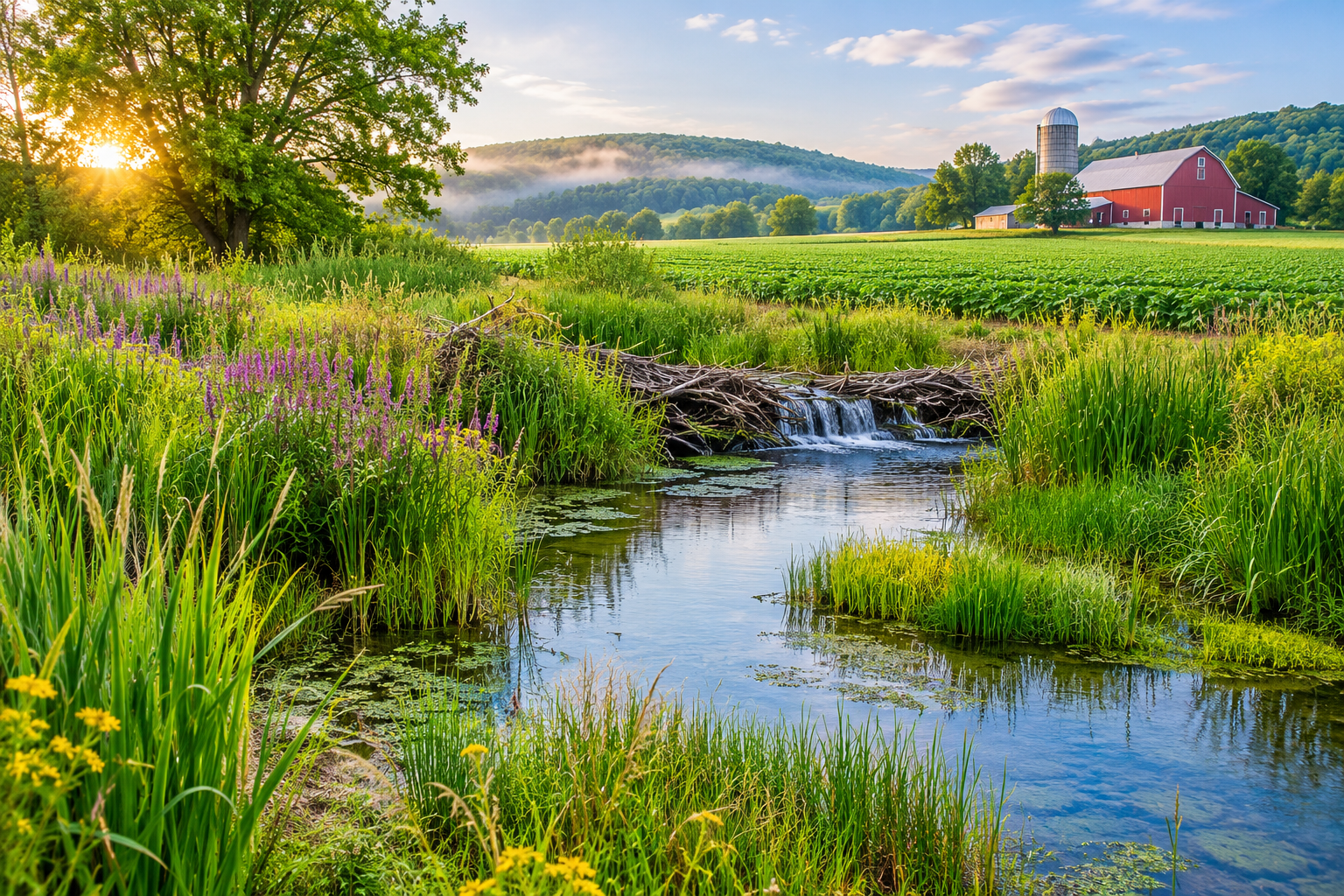
Quick answer: Native wetlands save water by slowing it down, filtering it, and storing it. Wildlife such as beavers and muskrats keep this system working. Farms can copy it with constructed wetlands, planted swales, and closed-loop irrigation.
Why Do Native Wetlands Matter for Water Conservation?
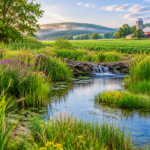
A healthy wetland works like a free water-treatment and flood-control plant. It slows water down. It lets soil and sand settle out. Plants and microbes then take up extra nutrients before the water moves on.
Wild animals keep this system running. Beavers, muskrats, wading birds, and many small invertebrates keep channels open and cycle nutrients. They also help stop the stagnant water and erosion that often affect poorly managed irrigation systems.
For water resource managers and eco-farmers, this makes natural wetlands a proven model for sustainable irrigation design. Natural wetlands that have active, animal-maintained channels filter nutrients and sediment better than straightened, drained channels.
How Does Native Wildlife Maintain Wetland Channels?
Native wildlife maintains wetland channels by building, clearing, and aerating them. Each species does a different job, and together they keep water moving, clean, and well oxygenated.
How Do Beaver Dams Improve Water Quality?
Beaver dams slow water so that sediment can settle before it reaches downstream waterways. This helps prevent erosion and keeps channels from silting up.
Beaver ponds also raise the water table. In a well-known study, researchers found that beaver dams send water through both surface runoff and groundwater seepage. This creates a self-adjusting network of channels instead of one fixed course. It is a kind of resilience that engineered irrigation systems struggle to copy at low cost.
Beavers can also help water quality during climate extremes. In a Colorado river study, Stanford researchers found that a beaver dam increased nitrogen removal by 44% compared with natural seasonal extremes. The full paper in Nature Communications reports that the dam’s effect on water flow was about 10 to 13 times larger than the effect of seasonal extremes. Beaver ponds can also preserve wetlands in water-stressed areas.
Beaver dams also affect how irrigation water is stored and shared. For more on that side of the topic, read our companion guide for irrigation engineers: how beaver dams raise water tables for irrigation.
What Do Other Wetland Animals Do?
Other wetland animals each add a special maintenance job:
- Muskrats eat dense plants, which keeps channels clear.
- Wading birds stir up sediment, which helps nutrients cycle instead of building up.
- Crayfish and burrowing insects loosen and aerate soil under the water.
Aerated soil is important. Without oxygen, ponds can become stagnant. This can lead to fish kills and bad smells.
What Is a Closed-Loop Irrigation System?
A closed-loop irrigation system captures, filters, and reuses water on site instead of releasing it after one use. This cuts water waste and keeps nutrients on the farm. These systems are growing in popularity in water-stressed regions, and they borrow ideas directly from wetland hydrology.
How Can Farms Apply Wetland Principles to Closed-Loop Irrigation?
Farms can apply wetland principles by using a constructed wetland or a planted swale to filter runoff before the water is reused or released. The idea mirrors a beaver pond: slow the water, let living things clean it, then let it move on cleaner than before.
Constructed wetlands are an established tool. The USDA’s Natural Resources Conservation Service lists them as a conservation practice to treat contaminated agricultural runoff and improve water quality. Engineers have also reported that well-placed wetlands can remove nutrients and pesticides from cropland runoff.
What Design Steps Can Farms and Landscapers Copy From Wetlands?
- Keep channels natural. Avoid straightening or fully draining them. Winding, planted channels filter better and erode less.
- Add a buffer zone. Use a shallow, gently sloped strip before water reaches open waterways.
- Plant dense native vegetation. It catches nutrients and slows flow, like natural filtration.
- Consider beavers on marginal land. Where the law allows, beaver activity on poor drainage land can be a no-cost water-management tool.
How Do Wetland Plants and Animals Work Together to Filter Runoff?
Wetland plants filter runoff, and wetland animals keep those plants healthy. Native sedges, rushes, and willows take up extra nitrogen and phosphorus from farm runoff. Without this uptake, these nutrients can feed algal blooms downstream.
Many of these plants need the disturbance that animals create, such as grazing, trampling, and nesting. This keeps the habitat open and sunny. If the animals disappear, the plant structure that filters water can fall apart too.
This is why wetland restoration projects now focus on bringing back animal populations, not only on replanting vegetation.
Who Can Use These Wetland Lessons?
These ideas help anyone who manages water on land:
- Water resource managers who plan watersheds and irrigation districts.
- Sustainable landscapers who design swales, buffers, and ponds.
- Eco-farmers who want to cut runoff, save water, and protect nearby streams.
Frequently Asked Questions
What is a closed-loop irrigation system?
A closed-loop irrigation system captures, filters, and reuses irrigation water on site instead of letting it leave after one use. This reduces water waste and nutrient runoff.
Can a small farm build its own constructed wetland for water filtration?
Yes. Constructed wetlands, also called treatment wetlands, can be sized for a single farm and are a recognized best management practice. A local conservation district or water resource office can help with design and permits.
Do beaver dams increase flood risk on farmland?
They can change how water spreads across a property. For this reason, many irrigation districts suggest beaver dam analogues or managed relocation near sensitive infrastructure, instead of unmanaged beaver colonies.
Do wetlands really remove nutrients from farm runoff?
Yes. Wetland plants and soil microbes take up and break down nitrogen and phosphorus. Well-sized wetlands can remove significant amounts of nutrients and pesticides from cropland runoff.
Is it legal to allow beavers on my land?
Rules depend on your country, state, or district. Some areas protect beavers, and others allow removal. Check with your local wildlife or water agency before you allow or remove beaver activity.
Sources and Further Reading
- Bio4Climate: Westbrook et al. (2006), Water Resources Research, on beaver dams and groundwater-surface water interaction
- Stanford News: Beaver dams and water quality during drought
- Nature Communications (2022): Beaver dams overshadow climate extremes in controlling riparian hydrology and water quality
- EARTH Magazine (AGU): Beavers preserve wetlands in water-stressed areas
- USDA NRCS: Constructed Wetland, Conservation Practice Standard 656
- Stormwater Solutions: Constructed Wetlands to Reduce Nutrients From Runoff in Croplands