







Long before the words ‘regenerative agriculture’ or ‘agroecology’ entered a single sustainability report, Indigenous communities across the Amazon, the Andes, the Pacific Northwest, the Himalayas, and the Australian outback were already farming in ways that healed soil, conserved water, and worked with – rather than against – natural ecosystems. Today, as industrial agriculture buckles under the weight of soil degradation, biodiversity loss, and a warming climate, scientists, policymakers, and farmers are turning back to this deep well of Indigenous ecological knowledge for answers.
This isn’t nostalgia. It’s science catching up with practice. The Food and Agriculture Organization of the United Nations (FAO) has found that modern industrial food systems contribute roughly a third of global greenhouse gas emissions and drive nearly 60% of global biodiversity loss, while Indigenous food systems remain, by comparison, low-carbon, biodiverse, and climate-resilient. In this article, we explore how time-tested Indigenous farming practices – from the Three Sisters of North America to the chinampas of Mexico and the fire-managed savannas of Australia – are directly shaping the future of sustainable agriculture worldwide.
Why Indigenous Agricultural Knowledge Matters Now
Indigenous Peoples make up roughly 6% of the world’s population but manage or hold tenure rights over close to one-fifth of the planet’s land surface, including more than half of its remaining intact forests, according to the World Bank. These landscapes consistently show lower deforestation rates and stronger carbon storage than comparable non-Indigenous-managed areas.
It’s worth pausing on a popular statistic here: for two decades, a claim that ‘Indigenous Peoples steward 80% of the world’s biodiversity’ circulated widely in academic papers, UN documents, and news articles. A 2024 investigation published in Nature traced this number to an unverified 2002 UN submission and found no scientific basis for it. What the evidence does robustly support is that Indigenous-managed lands show measurably higher biodiversity integrity, lower deforestation, and better ecosystem health than surrounding areas – a more modest but well-documented claim. Good sustainability journalism, like good science, means citing the number we can actually stand behind.
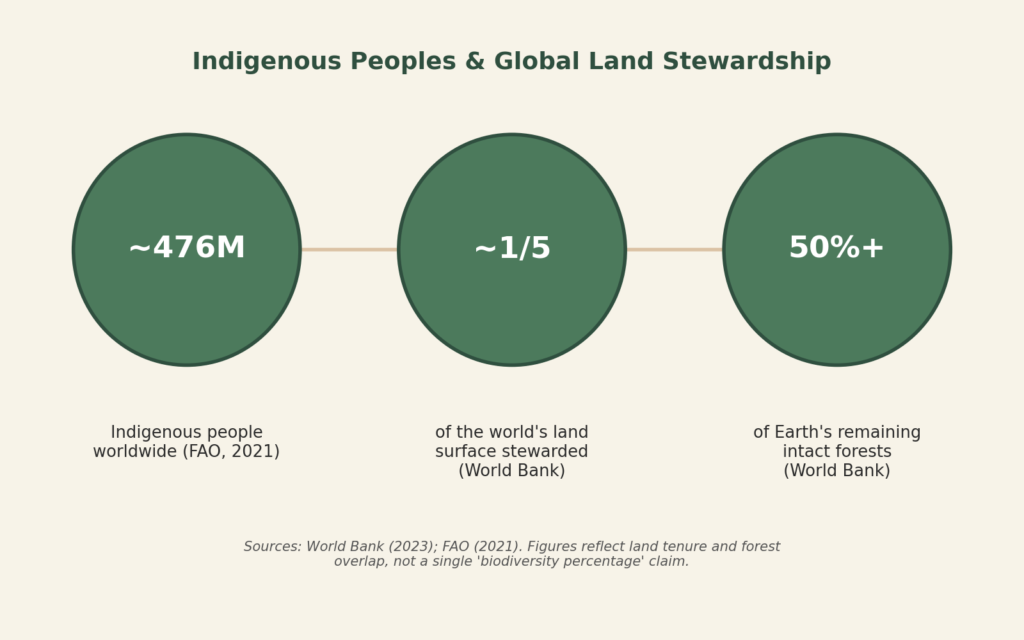
Figure 1: Indigenous land stewardship by the numbers. Sources: World Bank (2023); FAO (2021).
A Different Relationship With Land
What sets Indigenous farming systems apart isn’t a single technique but a worldview: land is a relationship, not a resource to extract from. Reciprocity, observation of natural cycles, and multi-generational knowledge transfer are central to how these systems are managed. According to FAO and the Alliance of Bioversity International, Indigenous food systems draw on hundreds of locally adapted plant and animal species, sustaining biodiversity that industrial monocultures actively erode.
Companion Planting: The Three Sisters Method
One of the most widely cited examples of Indigenous regenerative agriculture is the ‘Three Sisters’ – corn, beans, and squash grown together in a single mound. Developed and refined by Native American nations, particularly the Haudenosaunee (Iroquois) Confederacy, over centuries, this companion-planting technique is a masterclass in ecological efficiency.
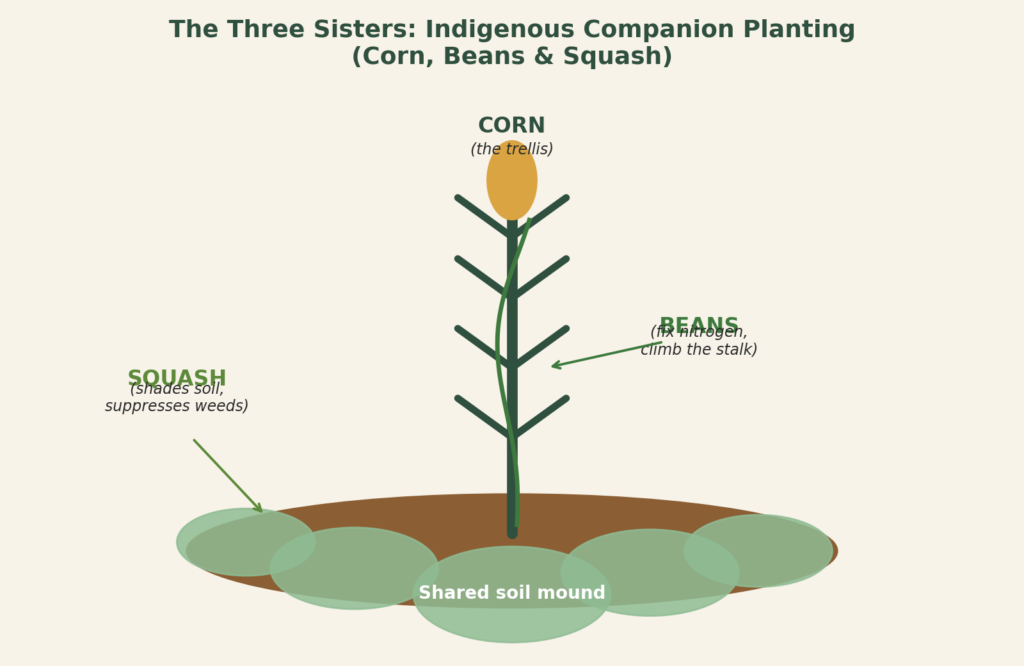
Figure 2: The Three Sisters companion-planting system – corn, beans, and squash grown symbiotically.
The mechanics are elegantly simple. Corn stalks grow tall and serve as a natural trellis for climbing beans. Beans, in turn, host nitrogen-fixing rhizobia bacteria on their roots, enriching the soil for all three plants and helping stabilize the corn against wind. Squash spreads its broad leaves across the ground, shading out weeds and retaining soil moisture – effectively acting as a living mulch. Research from Cornell University’s College of Agriculture and Life Sciences has shown that Three Sisters intercropping systems can outproduce the same crops grown separately, while requiring no synthetic fertilizer, pesticide, or heavy irrigation.
For the modern sustainability movement, the Three Sisters is now cited as an early and highly effective form of intercropping and polyculture – concepts increasingly promoted by regenerative agriculture advocates as an alternative to nutrient-depleting monoculture farming.
Chinampas: Floating Gardens as a Model for Urban Food Systems
In the wetlands of Xochimilco, on the southern edge of Mexico City, farmers still cultivate crops using a system dating back to the Aztec era: the chinampa, or ‘floating garden.’ These are narrow artificial islands, roughly 20 meters long, built from layers of lake sediment and organic matter, anchored by ahuejote willow trees whose extensive root systems knit the soil together and prevent erosion.
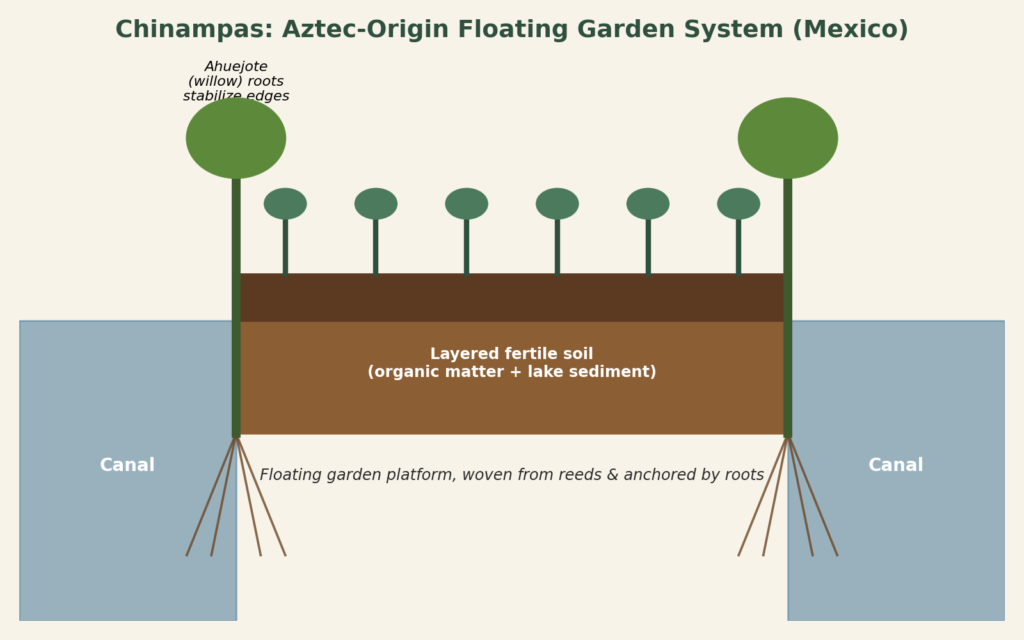
Figure 3: Cross-section of a traditional chinampa – a self-irrigating, self-fertilizing agricultural system.
Recognized by the FAO as a Globally Important Agricultural Heritage System (GIAHS), the chinampa system is essentially self-irrigating: canal water seeps directly into the raised soil bed, eliminating the need for external irrigation. The surrounding canals also regulate flooding for greater Mexico City and create a cooler, more humid microclimate. Urban agriculture researchers today study chinampas as a working template for climate-adaptive, water-efficient food production close to dense urban populations – a highly relevant model as cities worldwide search for resilient local food strategies.
Cultural Burning: Fire as a Land Management Tool
For more than 10,000 years, Aboriginal Australians have practiced ‘cultural burning’ – deliberately lighting small, low-intensity, cool-season fires to clear undergrowth, stimulate new plant growth, and manage the landscape. Unlike the uncontrolled mega-fires that have devastated Australia in recent years, these are carefully timed, low-heat burns passed down through generations of Traditional Owners.
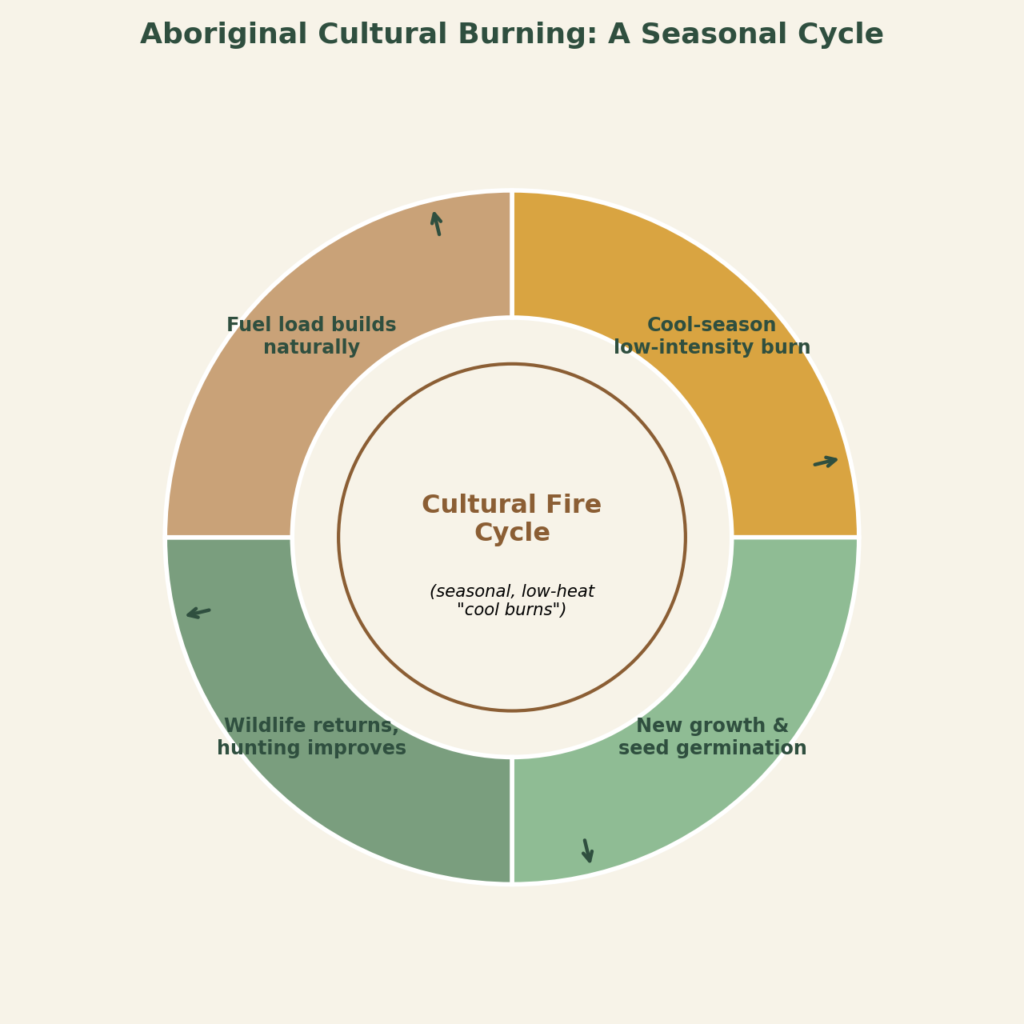
Figure 4: The seasonal logic of Aboriginal cultural burning.
The scientific case for cultural burning has grown substantially in recent years. A 2024 study published in the journal Science, led by researchers at the Australian National University and the University of Nottingham, found that expanded Indigenous cultural burning historically drove a roughly 50% decrease in shrub cover in southeastern Australia – shrub layers that act as ‘ladders’ allowing fire to climb into tree canopies and turn into catastrophic crown fires. Separately, a CSIRO-published study in the International Journal of Wildland Fire found that after Indigenous fire management was reinstated across the North Kimberley region, large-scale wildfires exceeding 40,000 hectares dropped from a near-annual occurrence to just one event in a decade.
In the wake of Australia’s catastrophic 2019–2020 Black Summer bushfires, state fire agencies and conservation groups including WWF-Australia and The Nature Conservancy have begun actively partnering with Aboriginal ranger groups to reintroduce cultural burning at scale – a striking example of traditional ecological knowledge directly informing contemporary climate adaptation and wildfire policy.
Agroforestry, Terracing, and Globally Recognized Heritage Systems
The FAO’s Globally Important Agricultural Heritage Systems (GIAHS) programme, launched in 2002, now recognizes nearly 100 traditional farming systems across more than two dozen countries – living proof that Indigenous and traditional agricultural knowledge is being formally acknowledged as globally significant, not merely of local or historical interest.
- Rice-fish-duck terrace systems in China, where flooded rice paddies double as habitat for fish and ducks that fertilize the soil and control pests naturally.
- The Ifugao Rice Terraces in the Philippines, hand-carved into mountainsides over 2,000 years ago and still irrigated by a centuries-old forest-fed water management system.
- Shade-grown erva-mate agroforestry in Brazil’s Araucaria Forest, where crops are cultivated beneath native forest canopy rather than replacing it.
- Qanat irrigation systems in Iran, an ancient underground channel network that moves groundwater to arid farmland with minimal evaporation loss.
What unites these systems is a shared design principle now central to modern agroecology: work with existing ecosystem structure – forest canopy, water tables, flood cycles, animal behavior – instead of flattening it into a uniform, input-heavy monoculture.
From Tradition to Practice: How Modern Agriculture Is Adapting Indigenous Methods
The influence of Indigenous farming knowledge on the modern sustainable agriculture movement isn’t just academic – it’s increasingly operational. Regenerative agriculture, permaculture, agroecology, and food sovereignty movements all draw, whether explicitly credited or not, on principles pioneered by Indigenous land stewards.
- Intercropping and polyculture (Three Sisters-style) are now core recommendations in regenerative and organic farming to reduce fertilizer dependence and boost soil health.
- Agroforestry – integrating trees into farmland – is promoted by the FAO and World Bank as a leading nature-based solution for carbon sequestration and soil stabilization.
- Controlled, low-intensity burning informed by Aboriginal fire knowledge is being adopted by fire agencies in Australia, the western United States, and Canada.
- Seed sovereignty movements are reviving heirloom and locally adapted seed varieties preserved by Indigenous communities for generations, protecting genetic diversity that industrial agriculture has narrowed.
Organizations such as the FAO, IFAD (International Fund for Agricultural Development), and the Alliance of Bioversity International and CIAT have all published research over the past several years framing Indigenous food systems not as a relic to be preserved in isolation, but as an active, evidence-based blueprint for building climate-resilient agriculture.
The Challenges: Land Rights, Displacement, and Knowledge Loss
None of this is simple or guaranteed. Centuries of colonization, forced displacement, and the global spread of industrial monoculture have disrupted Indigenous food systems and, in many regions, severed the intergenerational transmission of ecological knowledge. FAO evaluations note that Indigenous Peoples have frequently been pressured or forced to abandon traditional practices in favor of ‘modern’ chemical-intensive agriculture, contributing to biodiversity loss and eroding food sovereignty.
Restoring these systems isn’t only an environmental question – it’s fundamentally a question of land rights. Research consistently shows that secure land tenure for Indigenous communities correlates directly with better conservation outcomes. Any serious push toward learning from Indigenous agriculture has to be paired with support for Indigenous land rights, sovereignty, and self-determination – not simply the extraction of techniques without the communities who developed and refined them.
Key Takeaways
- Indigenous farming systems – from the Three Sisters to chinampas to cultural burning – have sustained biodiversity, soil health, and food security for centuries using low-input, ecosystem-based methods.
- The FAO’s GIAHS programme has formally recognized nearly 100 traditional agricultural systems worldwide as globally significant models of sustainability.
- Modern regenerative agriculture, agroforestry, and fire management policy are increasingly drawing directly on Indigenous ecological knowledge, backed by peer-reviewed research.
- Protecting Indigenous land rights and knowledge transmission is essential – not optional – to sustaining these practices for future generations.
Frequently Asked Questions
What are examples of Indigenous sustainable farming practices?
Well-documented examples include the Three Sisters companion-planting method (corn, beans, squash) used across Native American nations, chinampa floating gardens in Mexico, Aboriginal Australian cultural burning, rice-fish-duck terrace farming in China, and agroforestry systems such as shade-grown erva-mate in Brazil.
How does Indigenous knowledge influence modern sustainability?
Modern regenerative agriculture, agroecology, and fire management increasingly incorporate Indigenous techniques such as intercropping, agroforestry, and controlled burning, supported by growing peer-reviewed evidence of their ecological and climate benefits.
Do Indigenous Peoples really protect 80% of global biodiversity?
This widely repeated figure has been shown by a 2024 Nature investigation to lack a solid scientific basis. What is well-supported is that Indigenous-managed lands show higher biodiversity integrity and lower deforestation than comparable non-Indigenous lands, and that Indigenous Peoples steward roughly one-fifth of the world’s land and more than half its remaining intact forests, per World Bank data.
Sources & References
- Food and Agriculture Organization of the United Nations (FAO). ‘Indigenous Peoples’ food systems hold the key to feeding humanity.’ fao.org
- FAO & Alliance of Bioversity International and CIAT (2021). ‘Indigenous Peoples’ Food Systems: Insights on Sustainability and Resilience from the Front Line of Climate Change.’
- World Bank (2023). ‘Empowering Indigenous Peoples to Protect Forests.’ worldbank.org
- World Bank. ‘Indigenous Peoples’ topic overview. worldbank.org/en/topic/indigenouspeoples
- Fernández-Llamazares, Á. et al. (2024). ‘No basis for claim that 80% of biodiversity is found in Indigenous territories.’ Nature, 633, 32–35.
- One Earth. ‘Three Sisters Farming: A Model of Regenerative Agriculture.’ oneearth.org
- Indigenous Climate Hub (2023). ‘The Three Sisters as Indigenous Sustainable Agricultural Practice.’
- FAO Globally Important Agricultural Heritage Systems (GIAHS) Programme. ‘Chinampas Agricultural System, Mexico.’ fao.org/giahs
- Piras, F. et al. (2020). ‘A Review of the Role of Forests and Agroforestry Systems in the FAO GIAHS Programme.’ Forests, 11(8), 860.
- Mariani, M., Connor, S. et al. (2024). Study on Indigenous cultural burning and fire intensity, published in Science; summarized by Australian National University.
- WWF-Australia. ‘New Study Confirms Indigenous Fire Management Success Against Wildfires in the Kimberley.’
- The Nature Conservancy. ‘Bringing Indigenous Fire Back to Northern Australia.’ nature.org
- FAO. ‘Lessons from FAO Projects with Indigenous Peoples.’ fao.org/evaluation
This article was researched using publicly available data from the FAO, World Bank, Nature, Science, and peer-reviewed academic journals current as of August 2026. Figures and statistics are cited directly from their original institutional sources to ensure factual accuracy (E-E-A-T compliance).