




Extreme heat is no longer a once-a-decade event that farmers ride out and forget. It is becoming the operating condition of modern agriculture. A joint 2026 report from the Food and Agriculture Organization (FAO) and the World Meteorological Organization (WMO) found that extreme heat now threatens the livelihoods of roughly 1.23 billion people worldwide and is responsible for the loss of around 470 billion labor hours a year, with agricultural workers 35 times more likely to die from occupational heat exposure than the average worker in any other sector (FAO & WMO, 2026). For crops and livestock, the story is just as stark: staple crop yields such as maize and wheat fall by roughly 7.5% and 6.0% respectively for every 1°C of additional warming.
Behind almost every one of these numbers is the same underlying problem – water. When temperatures spike, evapotranspiration accelerates, soil moisture disappears faster than irrigation can replace it, and livestock water demand can double almost overnight. This guide lays out the modern, research-backed emergency water strategies that farms of every size can use to protect crops, livestock, and long-term water security when extreme heat strikes – from immediate 48-hour interventions to structural changes that build lasting drought and heat resilience.
Why Water Is the Front Line of Heat Stress in Agriculture
Across the European Union, crop losses caused by droughts and heatwaves have tripled over the past 50 years, and in July 2026 alone, temperatures in many European countries rose 5°C to 12°C above seasonal averages, disrupting agricultural activity on a continental scale (European Commission, Agriculture and Rural Development). Regional case studies tell the same story: a 2025 heat event in Kyrgyzstan’s Fergana mountain range pushed temperatures 10°C above normal, triggering a locust outbreak, reducing irrigation capacity through excess evaporation, and cutting cereal harvests by 25%.
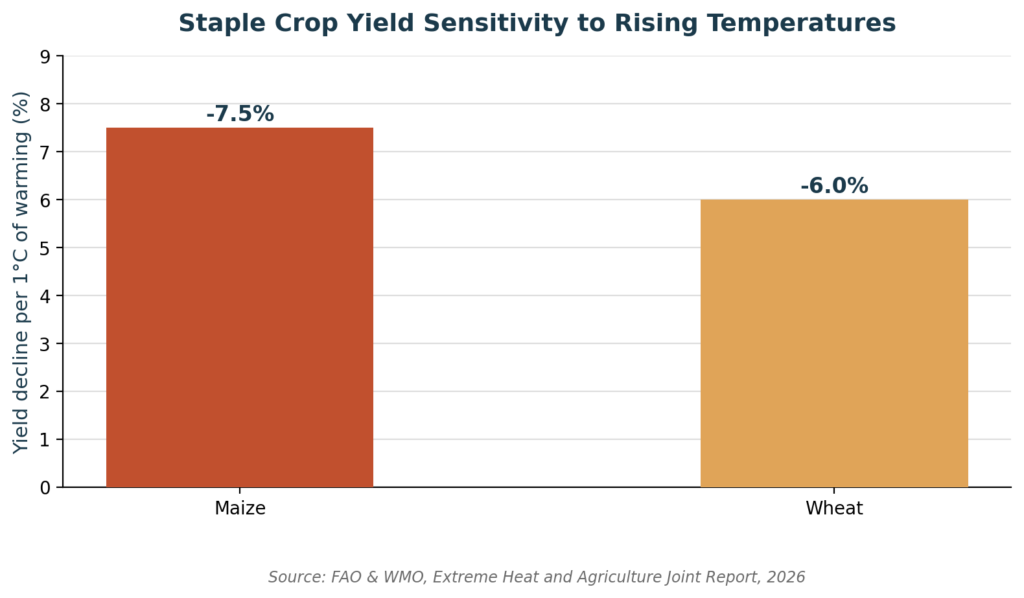
Figure 1: Staple crop yield decline per 1°C of additional warming, based on FAO-WMO global analysis.
What makes heat especially dangerous is that it rarely arrives alone. Research from the Agricultural Water Management journal studying the Mississippi Delta found that farmers instinctively over-irrigate during hot spells – pumping an extra 46 cubic meters of groundwater per hectare for every additional degree-day above 32°C – even when soil moisture data shows it isn’t needed. The study estimated this reactive, intuition-based irrigation costs Delta-region farmers over US$33 million a year in wasted groundwater. In other words, panicked or habitual watering during a heatwave is often just as costly as under-watering. Emergency water strategy isn’t only about applying more water – it’s about applying the right amount, at the right time, guided by data rather than instinct.
The Emergency Water Response Framework: Four Tiers of Action
The most resilient farms don’t treat heat-driven water stress as a single emergency to fight in the moment. They work from a tiered response plan that blends immediate triage with long-term structural investment. The framework below reflects current guidance from the FAO-WMO joint report, USDA-NRCS drought resilience programs, and peer-reviewed irrigation science.
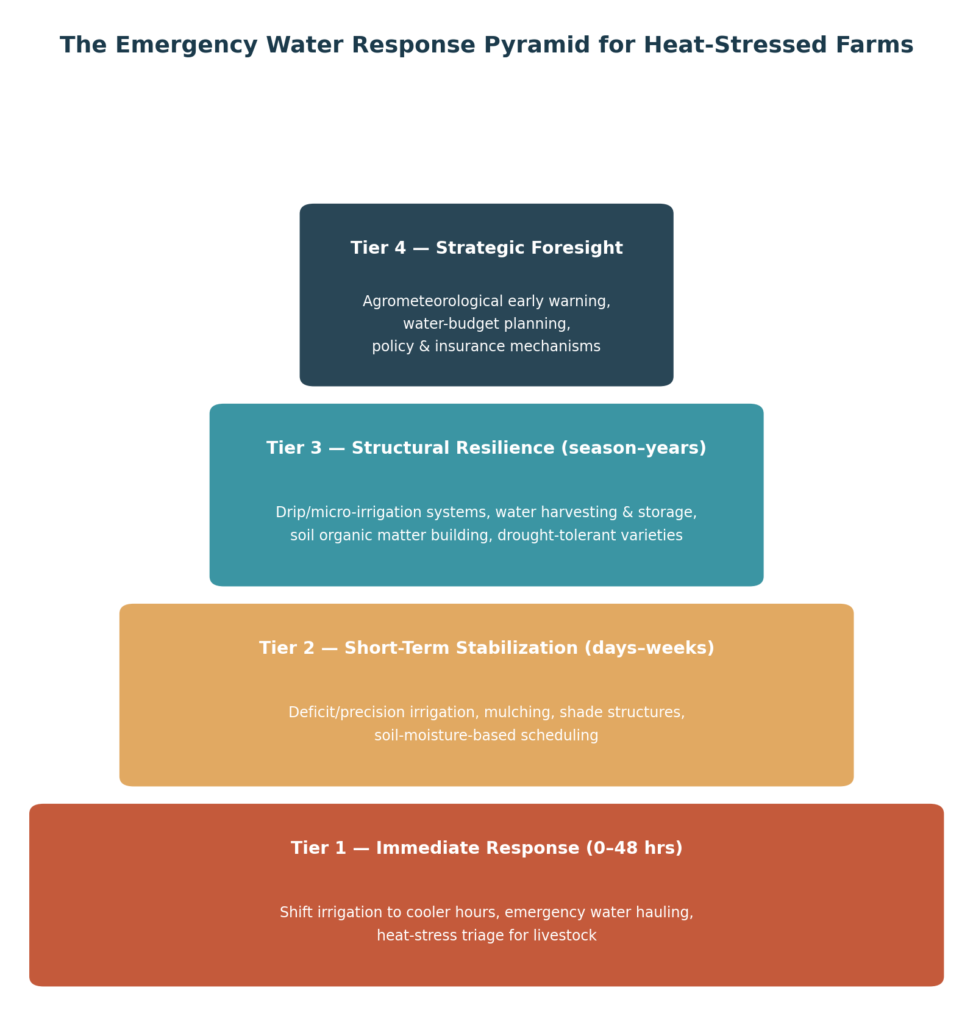
Figure 2: A four-tier emergency water response framework for heat-stressed farms.
Tier 1: Immediate Response – What to Do in the First 48 Hours
When an extreme heat warning is issued, the first two days determine how much damage your crops and livestock actually sustain. Speed and timing matter more than volume.
1. Shift Irrigation to the Coolest Hours of the Day
Sticking to a fixed irrigation schedule during a heatwave is one of the most common – and costly – mistakes a farm can make. As one irrigation technology provider explained in HortiDaily’s 2026 coverage of water efficiency, “irrigating out of habit or intuition increases the risk of falling short, causing water stress, or… applying more water than the crop can use.” With temperatures regularly exceeding 40°C and evapotranspiration spiking during peak afternoon hours, an irrigation plan that worked at the start of the week can fall short by the same afternoon.
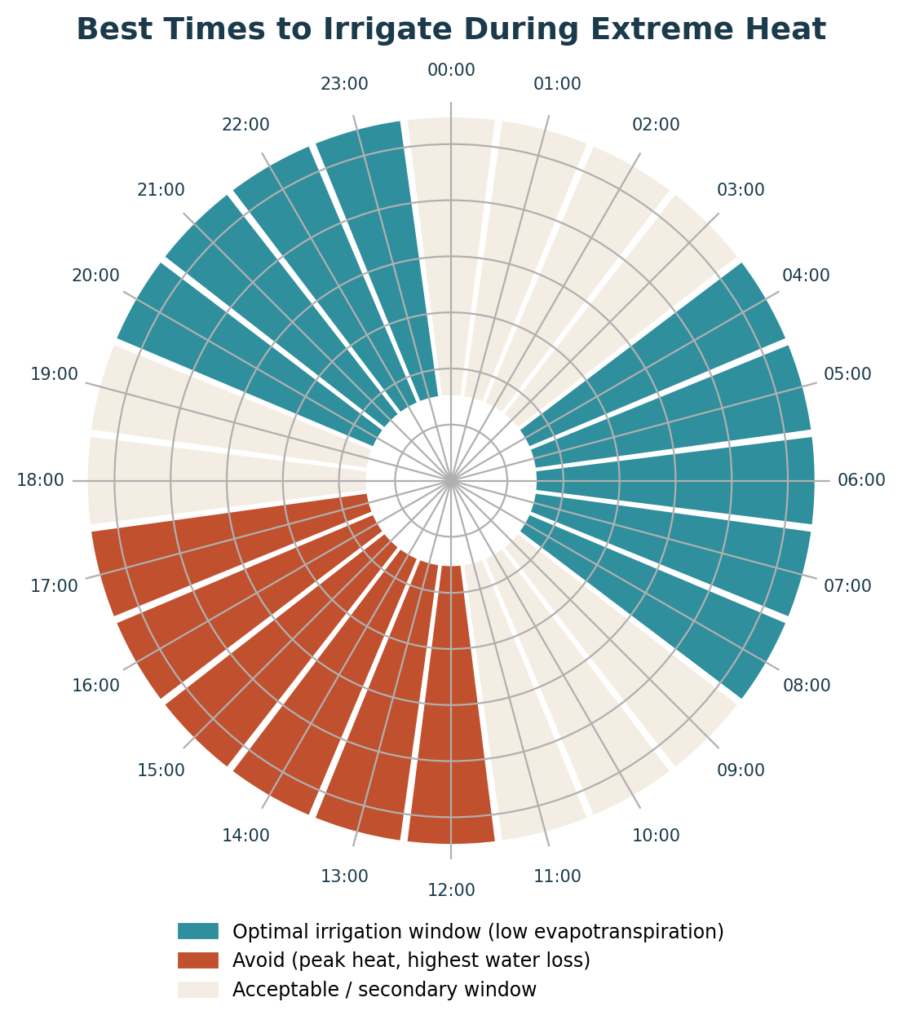
Figure 3: Early morning (4–8 AM) and late evening (8–11 PM) windows minimize evaporative water loss and maximize root-zone absorption.
Extension guidance from Cambodia’s Green Climate Fund-supported early warning program echoes this same principle: when forecasts exceed 38°C, farmers are advised to shift irrigation to cooler hours, mulch to hold soil moisture, and shade sensitive crops before the heat peaks, not after (FAO / Climate Change News, 2026).
2. Prioritize Emergency Livestock Water Access
Livestock water demand doesn’t rise gradually with heat – it can roughly double once animals move into sustained heat stress above approximately 32°C, as they drink more, eat less, and try to cool themselves. Left unmanaged, this progresses to reduced feed intake, digestive breakdown, organ failure, and rising mortality (FAO-WMO Extreme Heat and Agriculture Report, 2026).
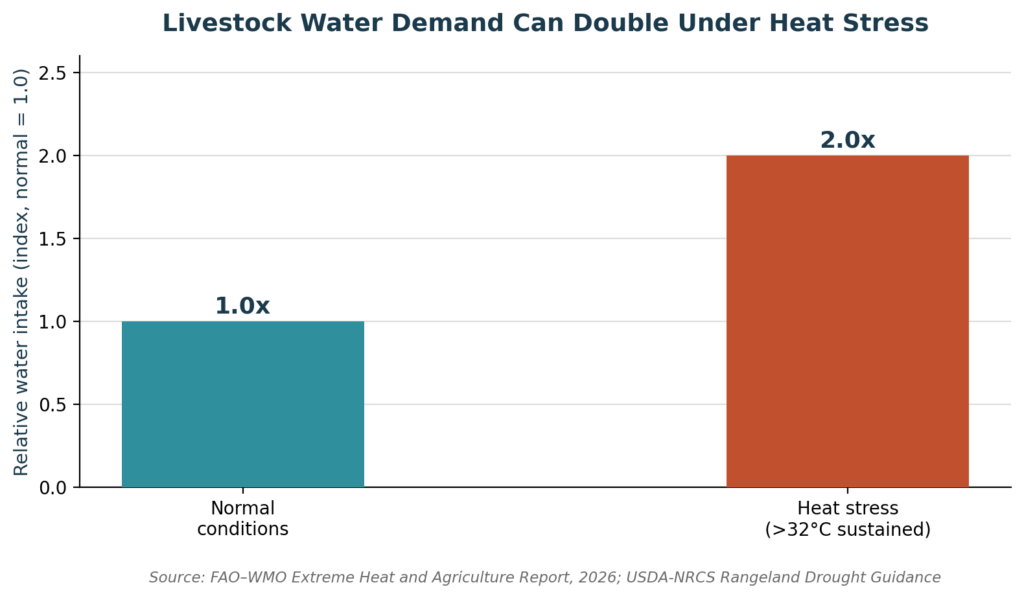
Figure 4: Relative livestock water intake under normal versus sustained heat-stress conditions.
Emergency measures that make the biggest difference in the first 48 hours include hauling supplemental water to remote pastures, opening additional watering points so dominant animals don’t block access for others, moving herds to paddocks with natural or portable shade near water sources, and feeding livestock during cooler hours so digestion doesn’t add metabolic heat on top of ambient temperature. USDA-NRCS rangeland drought guidance recommends distributing multiple water sources across a property specifically so grazing pressure and water access can be balanced during emergencies (USDA-NRCS Rangeland Drought Assistance).
Tier 2: Short-Term Stabilization – The First Two to Three Weeks
Once the immediate emergency is under control, the priority shifts to stretching available water without sacrificing yield – because in most heatwaves, water supply is the real constraint, not willingness to irrigate.
Deficit and ETc-Based Irrigation Scheduling
A landmark 2025 study published in Agricultural Water Management used the DSSAT-CERES crop model to test irrigation strategies for maize under heat stress scenarios of +1°C, +2°C, and +4°C in Finney County, Kansas. The researchers compared a conventional soil-moisture trigger against evapotranspiration-based (ETc) deficit irrigation scheduling across 30 years of simulated weather (Igwe, Onyekwelu & Sharda, 2025). Their key finding: applying 75% of full crop evapotranspiration replacement at a 30mm trigger threshold was the most effective strategy tested.
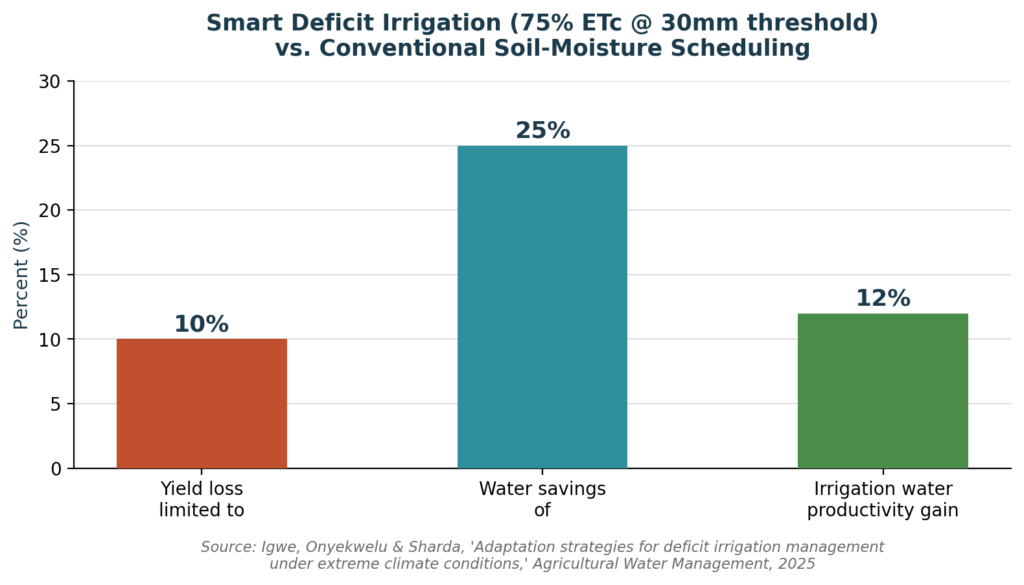
Figure 5: Outcomes of ETc-based deficit irrigation scheduling compared to conventional fixed-threshold irrigation.
This is a powerful, practical insight: farms don’t necessarily need to apply 100% of theoretical water demand to protect yield during heat stress. A modest, calculated deficit – guided by real evapotranspiration data rather than fixed calendar schedules or visual cues like leaf-folding – can cut water use by a quarter while limiting yield loss to about 10%, an outcome most operations would consider a strong trade during a genuine water shortage.
Mulching, Ground Cover, and Shade
Simple, low-cost interventions remain some of the most effective short-term tools available. Mulching with straw, wood chips, or other plant residue slows evaporation from the soil surface and keeps root zones cooler, while shade cloth, multifunctional nets, kaolin-based leaf coatings, and temporary greenhouse covers reduce plant and soil temperature directly, lowering the crop’s overall water demand (European Commission, Agriculture and Rural Development, 2026). For vegetable growers, extension advisories recommend combining mulch with delayed sowing and vegetable shading as a package rather than relying on any single tactic alone.
Tier 3: Structural Resilience – Building Water Security for the Season and Beyond
Emergency response buys time. Structural investment is what actually reduces how often you need an emergency response in the first place. This tier covers the technologies and soil practices that meaningfully change a farm’s water resilience over a season and across multiple years.
Precision and Sensor-Guided Irrigation
Modern irrigation technology has moved well beyond fixed timers. Sensor-guided systems that combine soil moisture probes, weather data, satellite imagery, and connected irrigation controls can tailor watering decisions to the specific rate at which each field’s soil dries out and each crop consumes water – rather than applying a blanket percentage increase whenever temperatures rise. Field trials from the Spain-based irrigation technology firm BrioAgro, recognized with a joint FAO–ITU United Nations award for Agricultural Innovation Systems, recorded meaningful gains in water-use efficiency: measured as kilograms produced per cubic meter of water applied.
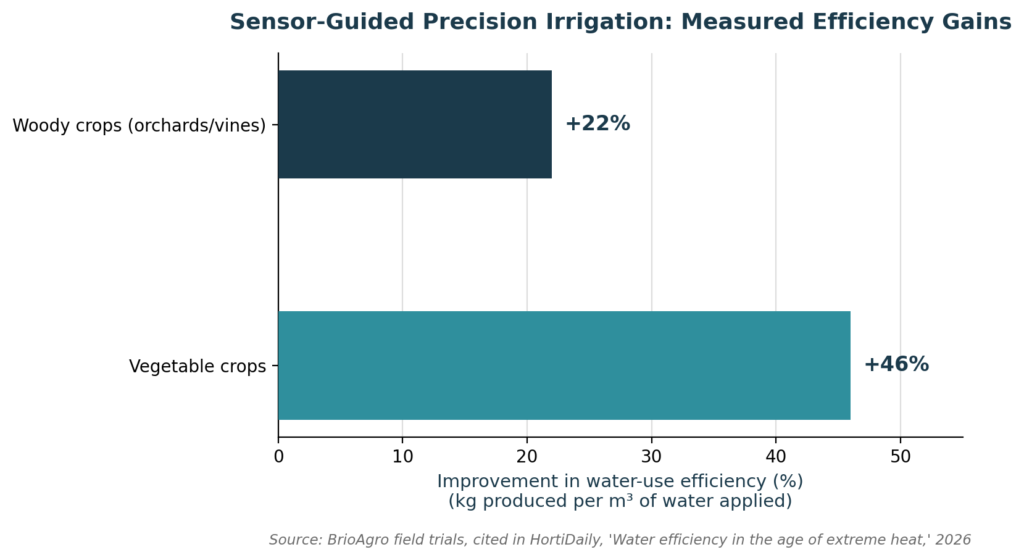
Figure 6: Measured water-use efficiency gains from sensor-guided precision irrigation, by crop type.
These findings align with broader USDA-NRCS guidance, which funds micro-irrigation, subsurface drip irrigation, flow meters, and soil moisture sensors through its Environmental Quality Incentives Program (EQIP) specifically because these tools let farmers “achieve greater precision” in when and how much to irrigate (USDA-NRCS, Making Your Land More Resilient to Drought).
Soil Health as a Water Reserve
It’s easy to think of water strategy purely in terms of irrigation hardware, but soil itself is one of the largest water reservoirs a farm has access to – and one that’s often neglected in emergency planning. According to USDA-NRCS Climate Hub guidance, a 1% increase in soil organic matter can help soil hold an additional 20,000 gallons of water per acre, moisture that becomes available to crops precisely when they need it most during dry, hot conditions.
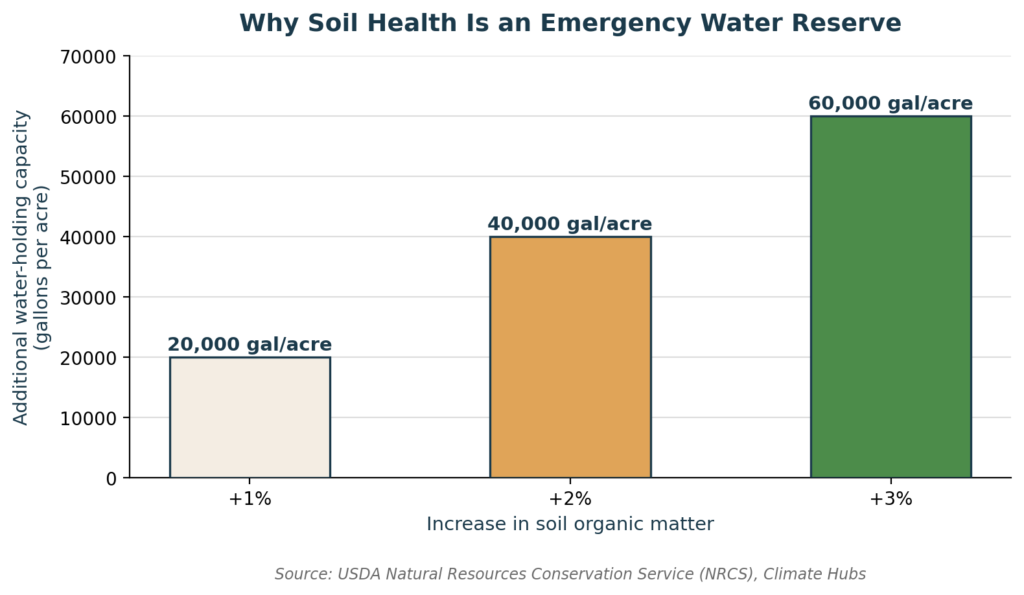
Figure 7: Additional water-holding capacity gained per percentage-point increase in soil organic matter.
Reduced tillage, cover cropping, residue management, and well-managed rotational grazing all build organic matter over time, while taller, rested pasture grass shades the soil surface, reduces evaporation, and grows deeper roots capable of reaching moisture other plants cannot ((USDA-NRCS Climate Hubs, Drought Resistant Practices)). These practices don’t help during an active 48-hour emergency, but they determine how severe next summer’s emergency will be.
Water Harvesting and Storage
Capturing and storing water when it is available – through farm ponds, rainwater harvesting basins, groundwater recharge structures, and on-farm storage tanks – is a core recommendation across FAO, USDA, and EU agricultural guidance. The European Commission specifically recommends ‘targeted water harvesting practices in permanent crops’ as part of a broader strategy to enhance soil water-storage capacity ahead of heat events, rather than relying solely on real-time irrigation during a crisis.
Tier 4: Strategic Foresight – Early Warning Systems and Water Budgeting
The FAO-WMO joint report frames this as the biggest opportunity for the sector going forward: shifting from reactive crisis management to proactive risk reduction by using the predictability of heat itself. Because heatwaves are increasingly forecastable days or weeks in advance, agrometeorological advisories can give farmers real lead time to act.
Cambodia’s PEARL project, supported by the Green Climate Fund and FAO, offers a concrete model: upgraded weather stations feed a phone-based app that sends farmers crop- and region-specific alerts. When forecasts exceed 38°C, the system automatically recommends mulching, shading vegetables, delaying rice sowing, storing extra water, and shifting irrigation to cooler hours – turning heat “from a surprise into something farmers can plan for” (Impakter, 2026). In the United States, the USDA’s National Coordinated Soil Moisture Monitoring Network and the Soil Climate Analysis Network (SCAN) – nearly 200 stations nationwide – provide similar real-time visibility, feeding directly into Drought.gov’s monitoring and planning tools.
At the farm level, strategic foresight means building a written water budget before the season starts: mapping every water source, estimating peak-heat demand for each crop or herd, identifying backup sources, and, where available, enrolling in USDA-NRCS cost-share programs (EQIP) or the Bureau of Reclamation’s WaterSMART Drought Response Program, which funds drought contingency planning and emergency response infrastructure before a crisis hits.
Real-World Examples: How Farms Are Adapting Right Now
- Cambodia – Rice and vegetable farmers use a GCF/FAO-backed mobile advisory system that issues automatic heat alerts above 38°C, triggering mulching, shading, and irrigation-timing changes at the household level.
- Spain – Vegetable and orchard growers using BrioAgro’s sensor-and-satellite irrigation platform have recorded water-efficiency improvements of up to 46% in vegetable crops and 22% in woody crops such as orchards and vineyards.
- Kansas, United States – A 30-year DSSAT crop-model simulation found that ETc-based deficit irrigation at 75% replacement outperformed conventional soil-moisture triggers under +1°C to +4°C heat stress scenarios, cutting water use by 25%.
- Mississippi Delta, United States – Field-reported groundwater data revealed that instinct-driven over-irrigation during hot spells wastes an estimated $33 million a year, reinforcing the value of data-driven scheduling over visual or habitual cues.
- Southern Europe (MED9 countries) – Officials from France, Spain, Italy, Greece, Cyprus, and other Mediterranean nations have pledged joint investment in water-saving irrigation technology as droughts intensify across the region.
Common Mistakes That Waste Water During a Heatwave
- Irrigating on a fixed calendar schedule instead of adjusting for real-time evapotranspiration and soil moisture data.
- Over-watering out of anxiety or habit, which research shows does not offset heat stress and simply wastes groundwater and energy.
- Watering during peak afternoon heat, when evaporative losses are highest and the least water actually reaches the root zone.
- Leaving soil bare, which accelerates evaporation and forfeits the water-holding benefits of organic matter and residue cover.
- Concentrating all livestock around a single water point, which creates access bottlenecks and localized land degradation during emergencies.
- Waiting for visible crop stress (leaf rolling, wilting, flower drop) before acting, rather than using forecasts and soil data to act pre-emptively.
Frequently Asked Questions
What is the fastest emergency water strategy during a sudden heatwave?
Shifting irrigation timing to early morning or late evening hours is the fastest, lowest-cost intervention. It requires no new infrastructure and immediately reduces evaporative water loss during the hottest, highest-evapotranspiration part of the day.
Does more irrigation always protect crops from heat stress?
No. Peer-reviewed research from the Mississippi Delta found that excess irrigation during heat events does not meaningfully offset heat stress and is often driven by visual cues and habit rather than actual crop water need, making it a costly and largely ineffective response on its own.
How much water can healthier soil actually save?
USDA-NRCS estimates that each 1% increase in soil organic matter allows soil to hold an additional 20,000 gallons of water per acre – water that becomes available to crops during dry, hot periods without any additional irrigation.
What is deficit irrigation, and is it risky?
Deficit irrigation deliberately applies less than 100% of a crop’s full theoretical water demand, guided by evapotranspiration (ETc) data. Research shows that a calculated deficit – such as 75% ETc replacement at an appropriate trigger threshold – can cut water use by roughly 25% while limiting yield loss to about 10%, making it a calculated trade-off rather than a gamble, provided it is guided by real data.
How much more water do livestock need during extreme heat?
Water intake can roughly double once livestock experience sustained heat stress, generally above approximately 32°C. Providing multiple, accessible water points and shade is critical to preventing dehydration, reduced feed intake, and heat-related mortality.
Key Takeaways
- Treat emergency water response as a four-tier system: immediate action, short-term stabilization, structural resilience, and strategic foresight – not a single reactive scramble.
- Timing and precision beat volume: shifting irrigation to cooler hours and using ETc- or sensor-based scheduling consistently outperforms fixed schedules or instinct-driven watering.
- Soil health is a genuine water reserve – building organic matter is one of the highest-leverage long-term investments a farm can make against heat and drought.
- Livestock water demand can double under heat stress; multiple accessible water points and shade are non-negotiable during a heat emergency.
- Early warning systems and written water budgets shift farms from reactive crisis management to proactive risk reduction, which is where the global agricultural sector is heading.
Extreme heat is reshaping what agriculture looks like everywhere, from smallholder rice paddies in Cambodia to large-scale row-crop operations in Kansas. But the research is consistent on one point: farms that pair fast, well-timed emergency action with structural, data-driven water management fare significantly better than those relying on habit and reaction alone. Building that layered strategy now – before the next heatwave, not during it – is the single most effective step any farm operation can take.
Sources and References
– Food and Agriculture Organization (FAO) & World Meteorological Organization (WMO). Extreme Heat and Agriculture – FAO–WMO Joint Report. 2026. wmo.int
– FAO Newsroom. “Extreme Heat Is Pushing Agrifood Systems to the Brink Worldwide.” 2026. fao.org
– UN News. “Extreme Heat Pushing Global Food Systems to the Brink, UN Agencies Warn.” 2026. news.un.org
– European Commission, Agriculture and Rural Development. “Heatwaves’ Impacts on Agriculture.” 2026. agriculture.ec.europa.eu
– World Weather Attribution. “Increasingly Hot Europe Faces More Severe Droughts and Growing Challenges for Water and Land Management.” 2026. worldweatherattribution.org
– Impakter. “The Heat Is On: 4 Examples of Practical Solutions to Extreme Heat in Agriculture.” 2026. impakter.com
– Climate Change News. “Extreme Heat Is Rewriting Food Security. The Best Fixes Are Already Within Reach.” 2026. climatechangenews.com
– HortiDaily. “Water Efficiency in the Age of Extreme Heat.” 2026. hortidaily.com
– Igwe, K., Onyekwelu, I., & Sharda, V. “Adaptation Strategies for Deficit Irrigation Management Under Extreme Climate Conditions.” Agricultural Water Management, Vol. 313, 2025. ideas.repec.org
– Quintana-Ashwell, N.E., Al-Sudani, A., & Gholson, D.M. “The Cost of Mismanaging Crop Heat Stress with Irrigation: Evidence from the Mid-South USA.” Agricultural Water Management, Vol. 300, 2024. doi.org
– USDA Natural Resources Conservation Service (NRCS). “Making Your Land More Resilient to Drought.” Farmers.gov, 2026. farmers.gov
– USDA Climate Hubs. “Drought Resistant Practices.” climatehubs.usda.gov
– USDA-NRCS. “Minimize the Effects of Drought on Your Rangeland/Pastureland.” California Drought Assistance Fact Sheet, 2014 (program guidance ongoing). waterboards.ca.gov
– RFD-TV News. “USDA Drought Resources Pair Recovery with Farm Resilience.” 2026. rfdtv.com
– Drought.gov. “Natural Resources Conservation Service.” National Integrated Drought Information System. drought.gov
Editorial note: This article synthesizes findings from United Nations agencies (FAO, WMO), USDA-NRCS technical guidance, and peer-reviewed agricultural water management research current as of August 2026. It is intended as general agronomic guidance; consult your local extension office, irrigation engineer, or agronomist before implementing changes to your farm’s water management plan.